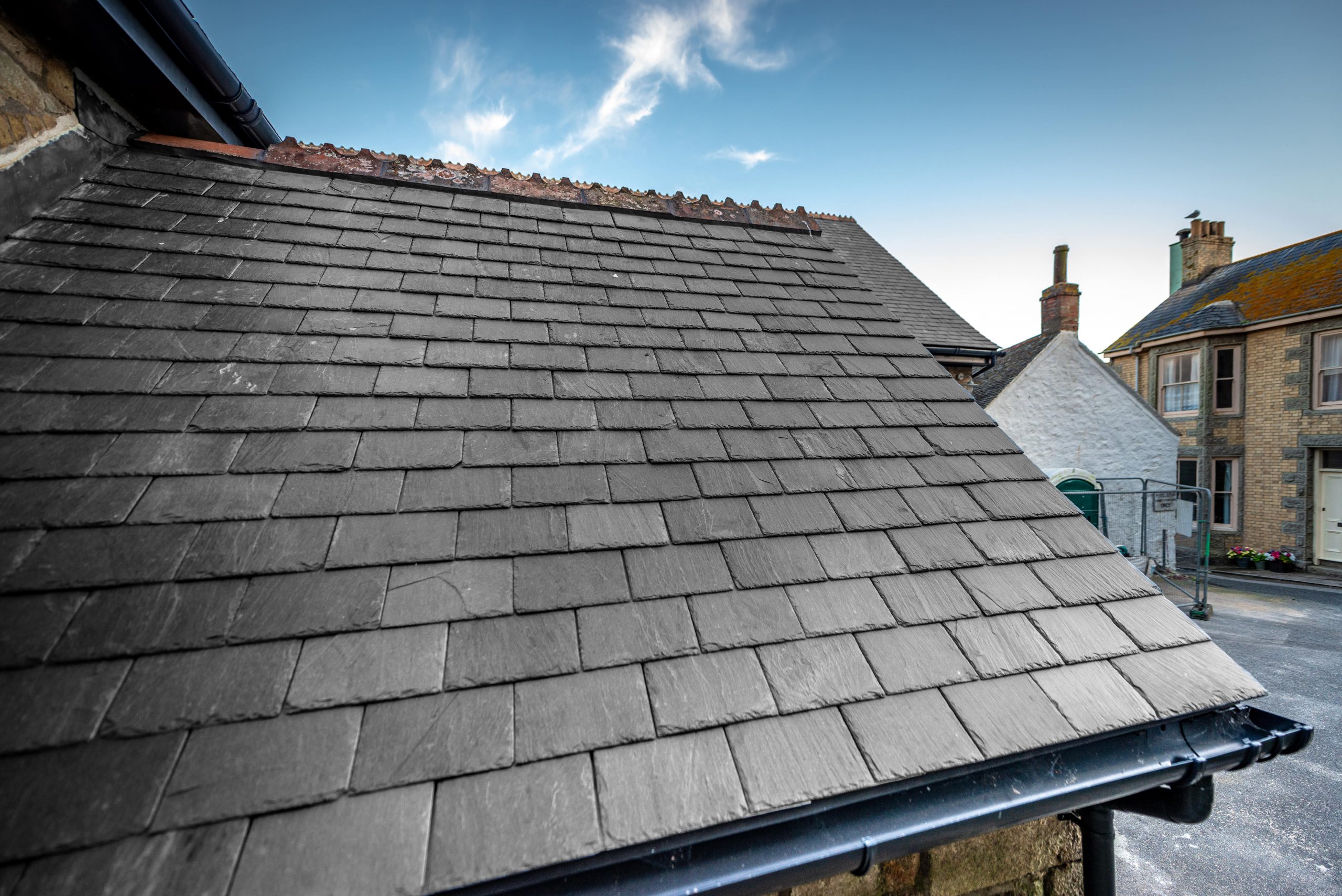
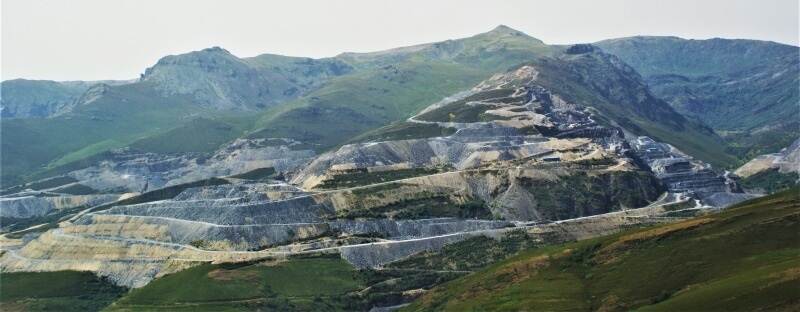
When choosing a natural slate for roofing, one standard should be front of mind: EN 12326. This rigorous European standard and code of practice tests roofing slates for performance, safety, and long-term reliability. It offers essential peace of mind for specifiers, roofing contractors, and construction professionals across the UK and Europe.
In particular, the W1, S1, and T1 classifications are critical indicators of slate quality, especially in the UK’s damp, frost-prone climate. If you’re specifying natural slate for a project, understanding these classifications isn’t just useful, it’s vital to ensuring compliance, durability, and an extended lifespan.
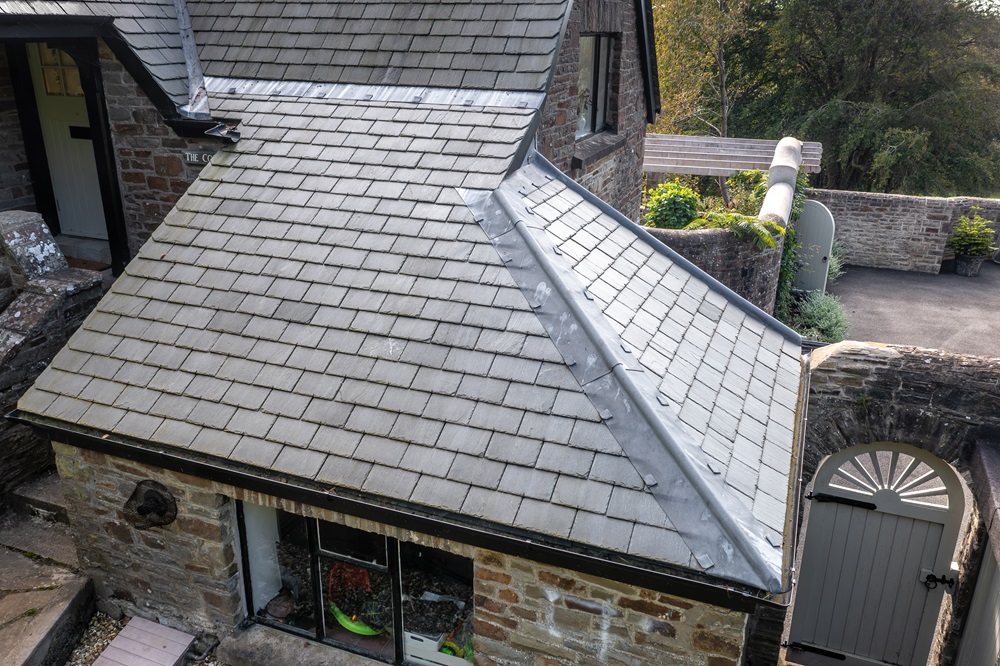
What is EN 12326?
EN 12326 is the European Standard for roofing and cladding slate. Formally titled BS EN 12326-1:2014, it provides performance testing methods and classifications for roofing and external cladding applications. To meet this standard, slates must undergo testing in several key areas:
- Water absorption
- Carbonate content
- Thermal cycle stability
- Mechanical strength
- Frost resistance
- Weathering behaviour
- Oxidation potential
Every slate product sold in the UK under CE marking must declare results through a Declaration of Performance (DoP), enabling specifiers to evaluate its compliance with building codes and long-term durability requirements.
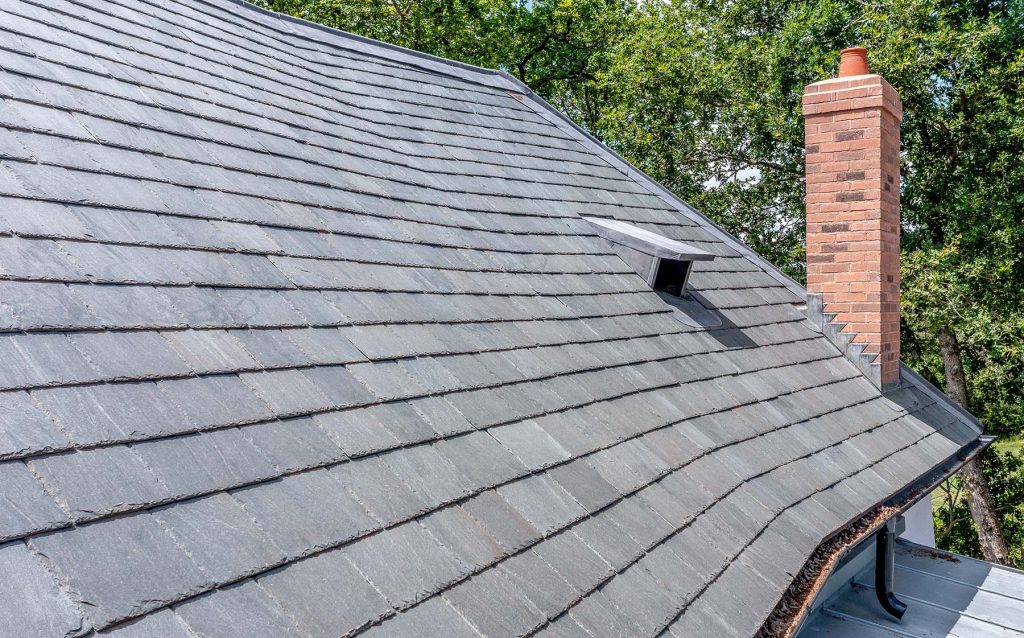
Why W1, S1 and T1 matter in slate specification
While EN 12326 includes multiple tests, three classifications stand out: W1, S1 and T1. These indicate the slate’s resistance to water, chemical degradation, and thermal cycling, three of the main causes of slate roof failure.
W1 – Water absorption
Water absorption is a key determinant of frost resistance and slate performance in the UK climate.
- W1 = Water absorption under 0.6%
- W2 = Over 0.6% (not recommended for roofing)
High water absorption can lead to freeze-thaw damage, delamination, and premature failure. That’s why at SSQ, all our slates, including Riverstone Phyllite and Del Carmen, are W1-rated, ensuring maximum resistance to frost and weathering.
S1 – Carbonate content
This test checks the chalk content (calcium carbonate) in the slate, which can affect its durability and lifespan.
- S1 = Less than 20% carbonate
- S2 = 20–30%
- S3 = Over 30% (not suitable for roofing)
High carbonate content increases the risk of whitening, leaching, and delamination—especially problematic in exposed conditions. S1 slates, such as those from SSQ, offer stable performance and retain their aesthetic quality for decades.
T1 – Thermal cycle / oxidation
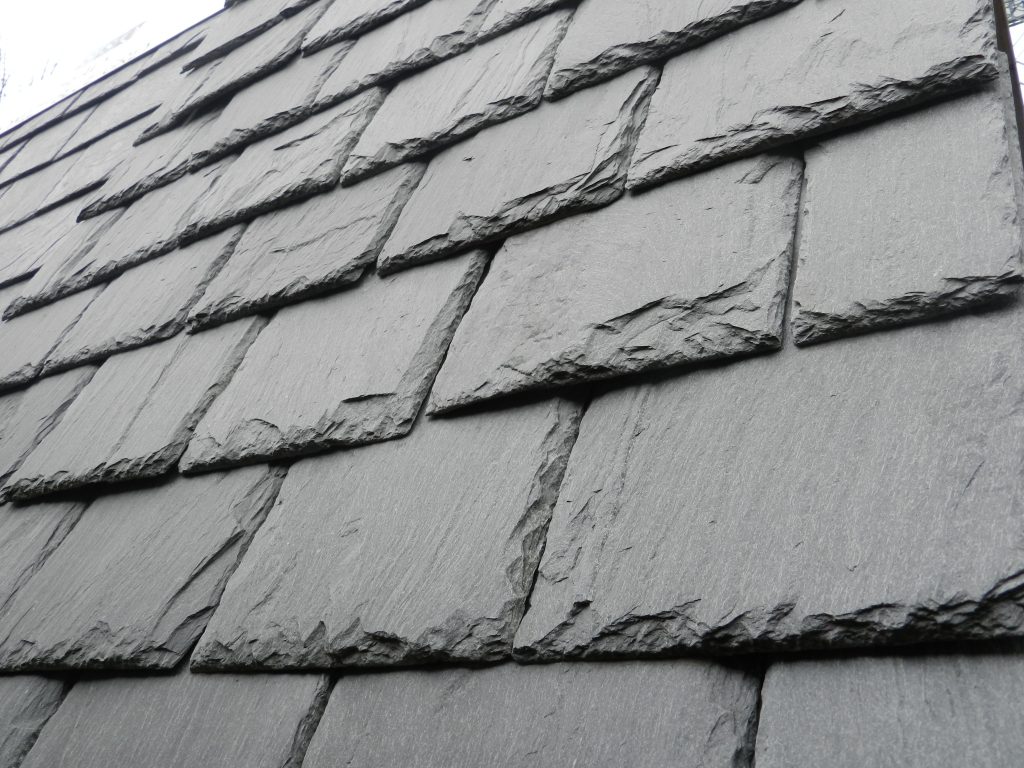
This test examines the presence of iron-sulphide inclusions (commonly known as pyrites), which can rust, discolour, and structurally damage slate over time.
- T1 = Inert or minimal reactivity; no structural changes
- T2 = Risk of streaking or leaching, but structurally sound
- T3 = Structural degradation likely
T1 slates are the most stable and least likely to suffer from oxidation, holes, or staining. All SSQ roofing slates fall into the T1 classification, meaning they meet the highest standards for thermal stability and weather resistance.
How to interpret a Declaration of Performance (DoP)
Every CE or UKCA-marked slate product must be sold with a Declaration of Performance (DoP), a legal document that provides the results of all required EN 12326 tests. When reviewing a DoP, check for the following:
- Water absorption result (<0.6% confirms W1)
- Carbonate content result (<20% confirms S1)
- Thermal cycling classification (T1 is best)
- Test lab information (ensureit’sfrom an accredited facility)
- Compliance with BS EN 12326-1 (Part 1 is for slate roofing)
A reliable slate supplier should make these documents easily accessible. At SSQ, we publish downloadable DoPs for all our leading natural slate products, including our Del Carmen Spanish slate and our Riverstone Phyllite. If a DoP isn’t available or seems unclear, this could indicate poor traceability or non-compliance. We encourage architects and contractors to speak directly with our technical team to confirm details.
What can go wrong with non-compliant slate?
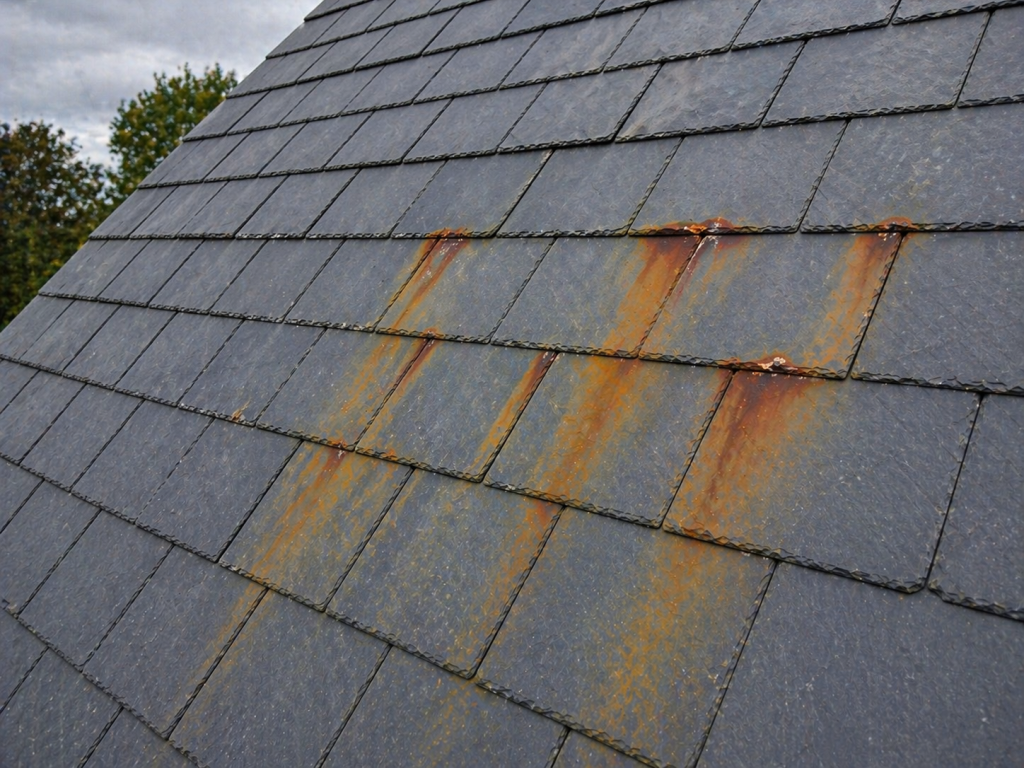
The natural beauty and durability of slate make it a premium choice, but choosing the wrong product can lead to expensive failures. What can go wrong:
Oxidation: Oxidation occurs when slate is exposed to air and moisture over time. This process can cause the slate to change colour, typically resulting in a brownish appearance. It’s mostly an aesthetic issue but it can sometimes lead to weakening of the slate in severe cases.
Leaching: Leaching is the process where minerals and other substances are dissolved and washed out of the slate by water. This can lead to discoloration, often appearing as white or light-coloured streaks on the roof. Leaching can weaken the slate over time and may indicate that the slate is nearing the end of its lifespan.
Delamination: Delamination occurs when the layers of the slate begin to separate, causing the slate to flake or split. This can be due to freeze-thaw cycles (when water fills small cracks and gaps in the slate, freezes in cold weather, the ice expands, which causes bits of slate to break off) poor quality slate, or natural weathering over time. Delaminated slates are more likely to fall off the roof and can lead to leaks.
These problems not only compromise the building’s performance but also damage its appearance and often require full roof replacements. With properly tested, EN 12326-certified, T1/S1/W1 slate, these issues are easily avoided.
Choosing SSQ: trusted technical guidance and tested quality
For over four decades, SSQ has supplied the UK and European markets with world-class roofing slates and cladding slates. All our products undergo extensive testing in accordance with EN 12326, and we work only with quarries that meet the highest technical and ethical standards. You can rely on SSQ for:
- Proven W1, S1 and T1 performance
- Fully traceable and compliantDoPs
- Expert technical support for specifications
- Decades of proven lifespan and low maintenance
How do I specify EN 12326-compliant slate in my project?
When writing your roofing or external cladding specification, make sure to:
- Require compliance with BS EN 12326-1
- Specify minimum W1 water absorption
- Insist on S1 carbonate content
- Only allow T1 thermal stability slates
- Request a full Declaration of Performance from the supplier
- Work with trusted partners like SSQ, who provide full technical backing
Need support with your slate specification?
If you’re unsure how to interpret a DoP or need assistance choosing the right roofing slates, SSQ’s expert team is here to help. We’ve worked with architects and contractors across the UK for more than 40 years, ensuring compliant, long-lasting, and aesthetically stunning results in every project. If you’re working on a slate roofing project and want advice from a supplier you can trust, contact our expert technical team today to support with slate selection and technical specification or to explore our range of EN 12326-compliant roofing slates.
Frequently asked questions
What is EN 12326?
EN 12326 is the European standard for testing natural slate used in roofing and cladding.
Why are W1, S1 and T1 ratings important?
They are key classifications and to indicate superior water resistance, chemical stability, and durability against oxidation and frost – water absorption (W1), weather resistance (S1) and thermal stability (T1).
Do all SSQ slates meet EN 12326 requirements?
Yes. All SSQ roofing slates, including Riverstone and Del Carmen, meet the highest standards for durability, weathering and appearance and are W1, S1, and T1 rated, and fully compliant with BS EN 12326-1.