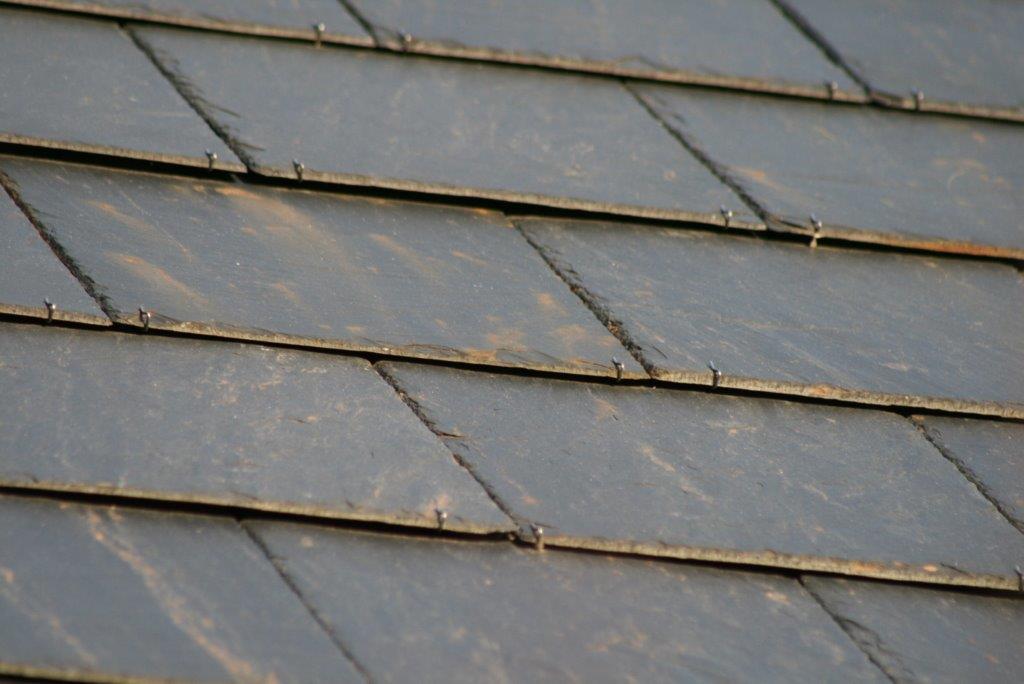
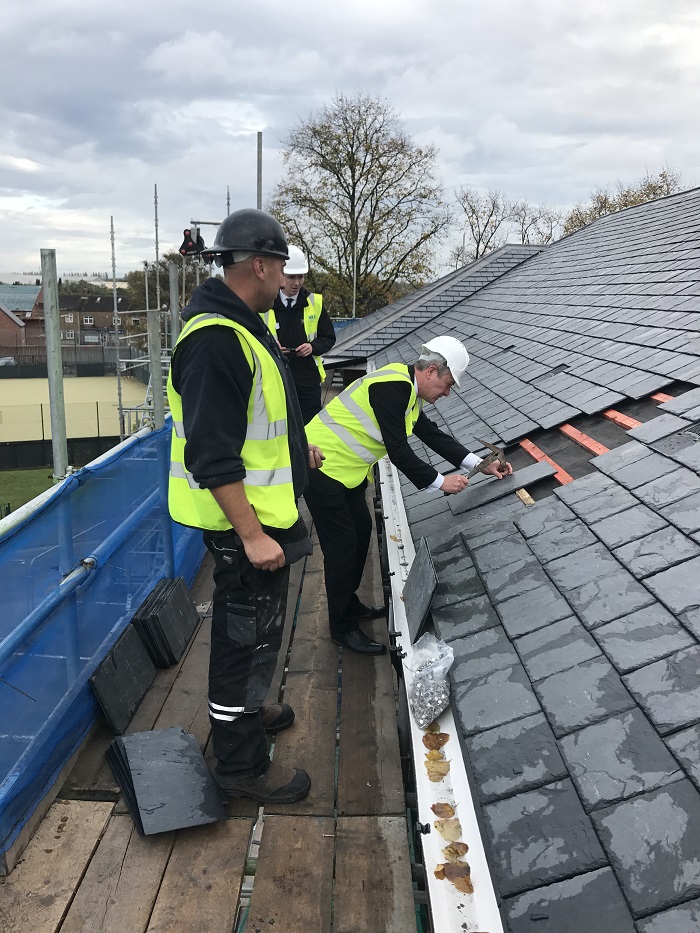
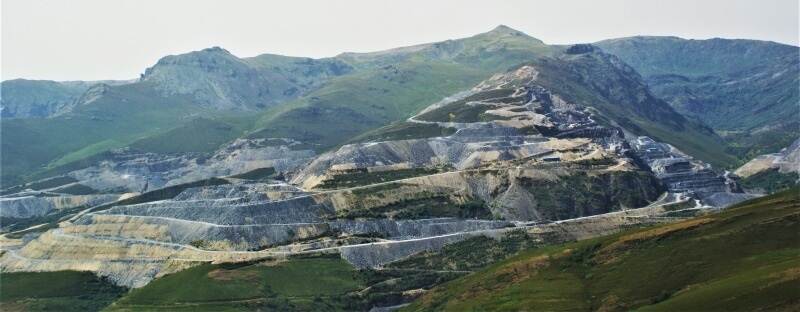
In commercial roofing, the greatest risks are often the ones that are hardest to spot. Pyrite-related rust bleed is one of them. It does not appear at specification stage and is rarely visible during installation, yet once it emerges on a finished slate roof, the financial and reputational consequences can be severe.
For contractors and developers focused on long-term performance, understanding how to specify non-rusting roofing slate is not just good practice, it is essential risk management.
What is pyrite and why does it affect slate roofing?
Pyrite, or iron sulphide, is a naturally occurring mineral found in many forms of natural slate and appears as small metallic inclusions within the stone. Not all pyrite behaves the same way:
Stable pyrite (T1 classification)
- Typically cubic with clean edges
- May oxidise slightly over time
- Does not cause staining or affect performance
Unstable pyrite (T2 and T3 classifications)
- Smaller, more dispersed inclusions
- Prone to oxidisation and breakdown
- Causes visible rust streaking and potential structural damage
For a natural slate roof, this distinction is critical. While stable inclusions pass the test of time, unstable ones introduce a hidden defect that can compromise both appearance and durability.
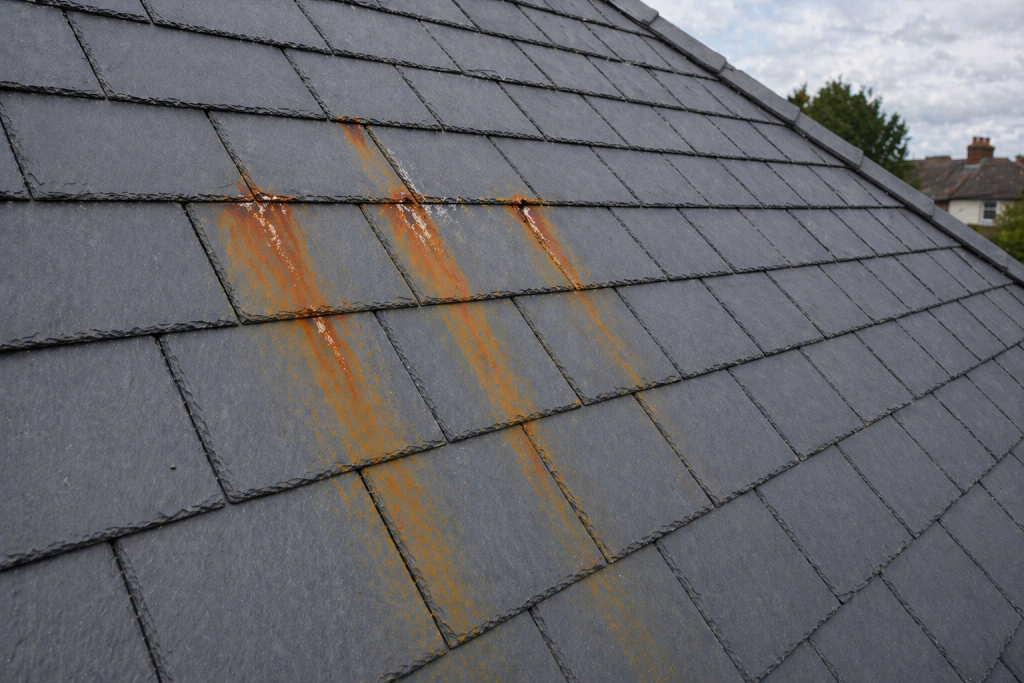
Why is rust bleed such a costly failure on commercial roofs?
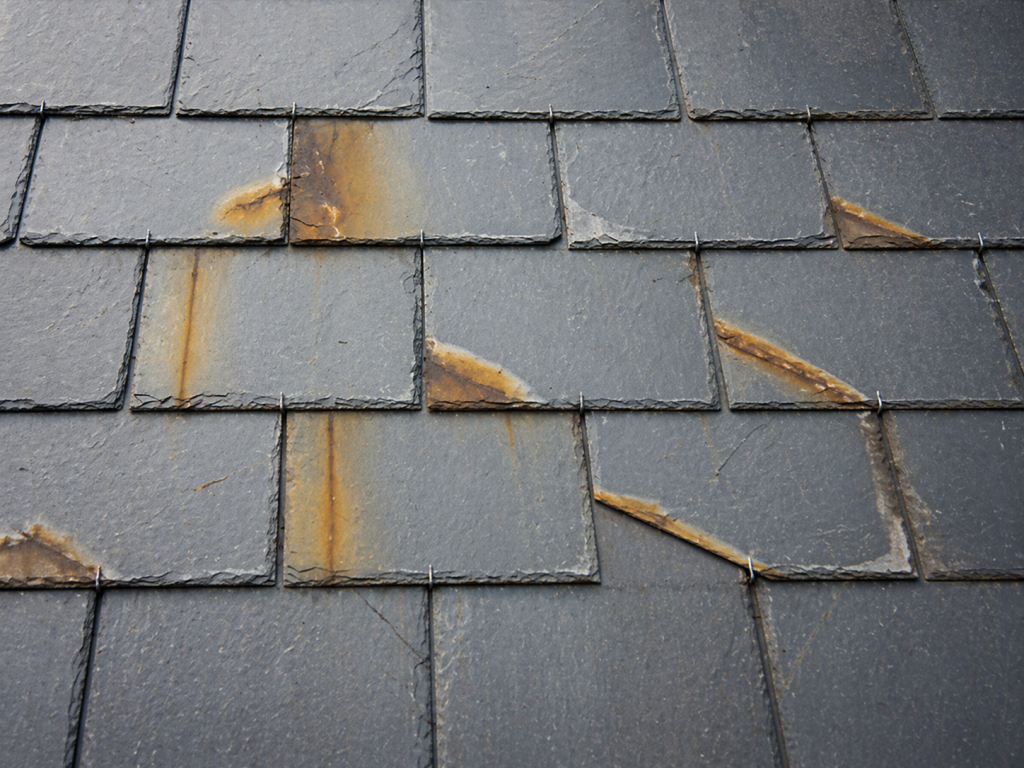
On large-scale projects, even minor material defects scale quickly. Rust bleed presents as red-brown streaks running down roofing slates. Once this staining appears:
- It cannot be cleaned or reversed
- It spreads across surrounding slates
- It undermines the visual integrity of the building or architectural style
The only remedy is full replacement of affected areas with replacement slates. On commercial buildings, this often means access costs such as scaffolding or cranes, labour-intensive strip and relay work, programme delays and reputational damage with clients and stakeholders.
Remediation can run into tens of thousands of pounds on large roofs, far outweighing any initial saving on lower-cost materials.
How does testing define non-rusting roofing slate?
The key benchmark for natural slate roofing in the UK is BS EN 12326, which includes thermal cycling tests to assess pyrite behaviour. The three classifications include:
- T1: No structural damage, minimal surface oxidation only
- T2: Staining and rust bleed possible
- T3: Structural degradation, including holes
For compliance, UK projects require T1-rated roof slate. However, simply stating compliance is not enough. The only way of guaranteeing quality of slates is to buy from a reputable supplier; one that can provide documentation of BS EN 12326 test results and who tests continuously to prove the consistency of a quarried natural material.
Is specifying non-rusting roofing slate enough?
This is where many commercial specifications fall short. You cannot identify unstable visible pyrites through visual inspection alone. Slates from different seams or quarries can look identical on delivery yet behave very differently once installed. Key risks include:
- Mixed batches from multiple sources
- Inconsistent mineral composition
- Lack of traceability
- Inadequate or outdated test data
Why source control matters for natural slate selection
The only reliable safeguard against rust bleed is strict source control. High-quality natural materials must be full fully traceable to a single quarry, tested continuously and supplied with verifiable documentation.
Some suppliers blend mix and match slate from multiple quarries under one label and, while this may reduce upfront cost, it introduces variability that can lead to failure over time.
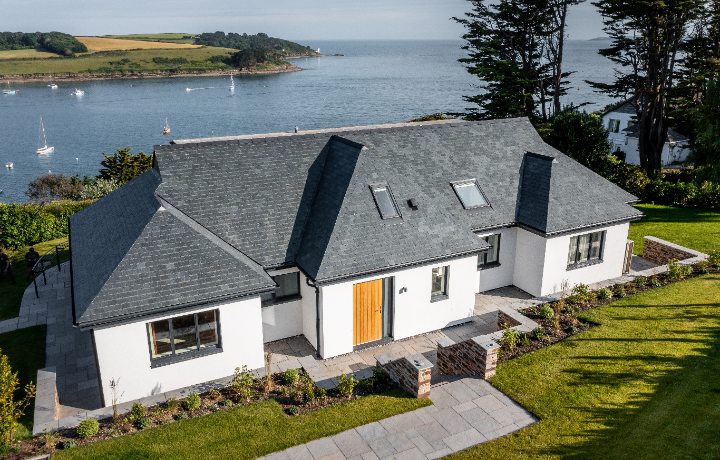
How SSQ delivers non-rusting roofing slate for commercial projects
SSQ eliminates this risk of not getting the right slate through tightly controlled sourcing and rigorous testing thanks to its exclusive quarries in Spain and Argentina, which provide peace of mind.
Every slate SSQ supplies can be traced to its exact source, ensuring consistent quality and appearance for decades and is independently tested to BS EN 12326 standards.
SSQ’s full product range, including Del Carmen Spanish slate, carries W1-T1-S1 classification and it is a popular choice for commercial and public buildings due to their consistency and durability.
Choosing the right roofing material always starts with the right supplier
Pyrite-related failure is entirely preventable. The cost of getting it wrong is high, yet the solution is straightforward: specify non-rusting roofing slate from a trusted, controlled source.
SSQ provides the traceability, testing and technical expertise required for high-value commercial projects which is why millions of SSQ slates have been installed by customers all over the world.
For specification guidance, SSQ’s professional resources centre provides full technical PDFs and test data. You can also book a RIBA-approved CPD to go deeper on slate specification and performance standards. Speak to SSQ today and ensure your next slate roofing project is built to stand the test of time.