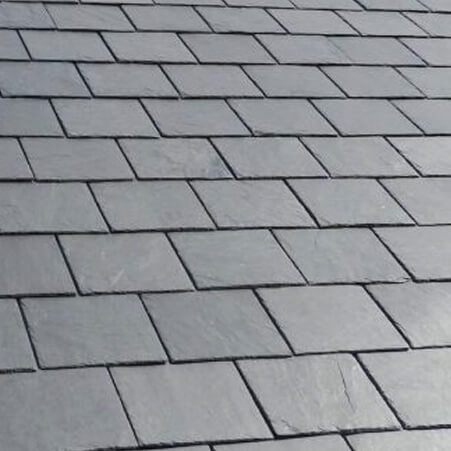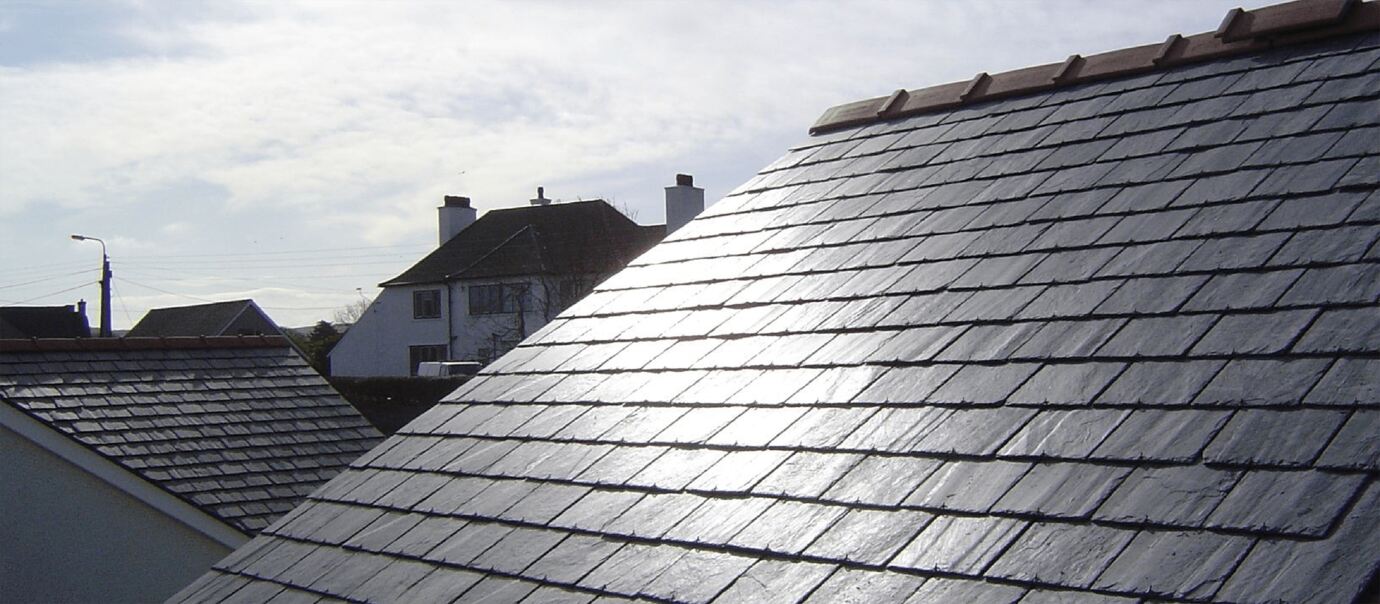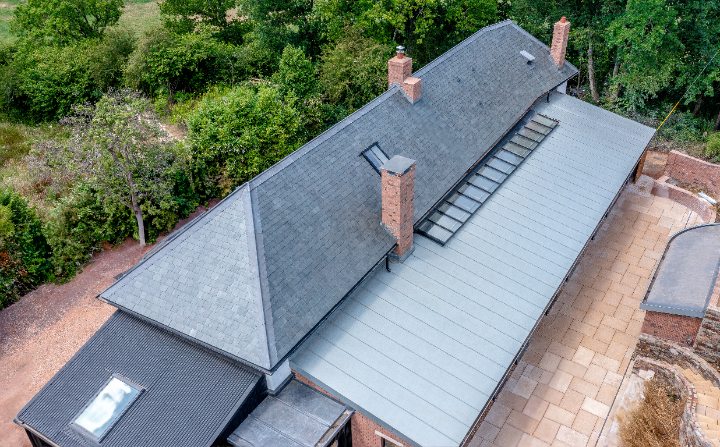
Quick answer: Riverstone phyllite is not standard slate. Formed over 560 million years under extreme geological pressure, it is harder, denser and less porous than conventional roofing slate, making it one of the few natural stone materials genuinely suited to roofing, natural slate cladding systems and interior flooring from a single, consistent source. If you are specifying a façade, a roof or a floor finish and need a material that performs at the highest technical level without chemical treatment or ongoing maintenance, Riverstone is worth reading on.
What makes Riverstone different from standard slate?
Riverstone is phyllite, formed under greater heat and pressure than natural slate. This extended geological process creates:
- Lower porosity and low water absorption (around 0.2% compared to 0.4% for slate)
- Increased density and strength
- A satin-like lustre from mica crystallisation
These natural properties of this outstanding material result in reliable protection in harsh weather conditions. For architects working on exterior applications, that performance difference is critical.
Globally, around 97% of slate production is traditional slate, with only 3% classified as phyllite or similar stones. That rarity underpins the value of slate alternatives like Riverstone.
Why consider natural slate cladding systems beyond roofing?
When specifying natural slate cladding systems, performance matters as much as appearance. A façade must deliver:
- Weather resistant protection
- Fire safety compliance
- Long-term durability with low maintenance
Riverstone Phyllite is a premium choice for architectural stone cladding and meets these demands with ease. Certified to BS EN 12326 (W1-T1-S1) and rated A1 non-combustible, it is suitable for modern facade systems and sensitive renovation works alike.
Natural slate cladding systems for modern facades
Riverstone performs exceptionally well as part of a natural slate cladding system. Its low water absorption and resistance to pollutants make it ideal for exterior wall cladding in exposed environments. Key benefits include:
- Long service life with minimal processing
- Resistance to freeze-thaw cycles and salt exposure
- Consistent performance across a wide range of climates
For a growing number of architects, this makes it a perfect solution for both contemporary and heritage projects.
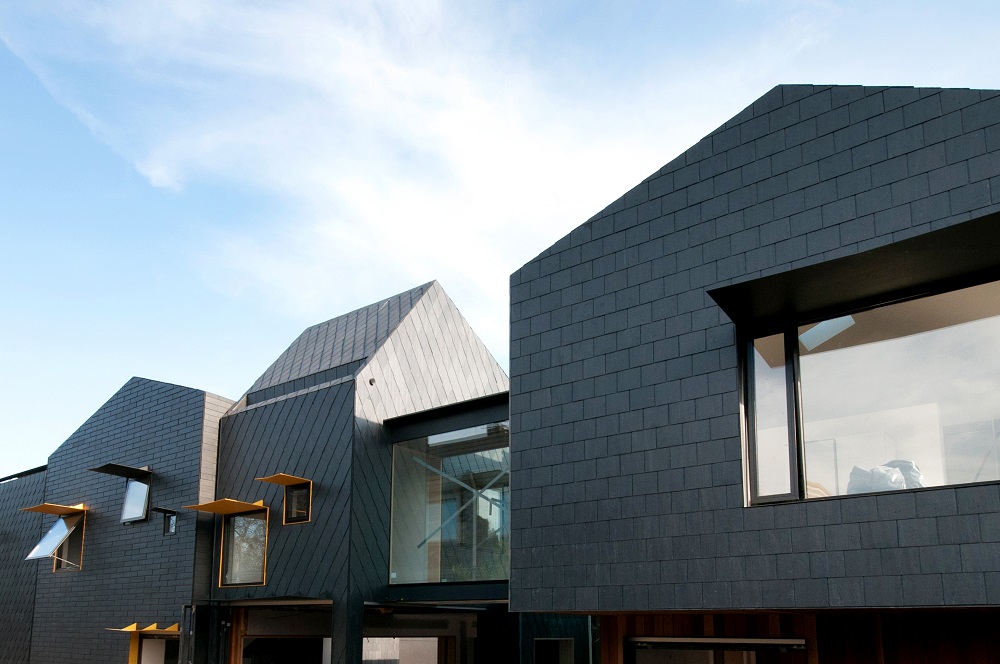
Slate wall cladding with architectural depth
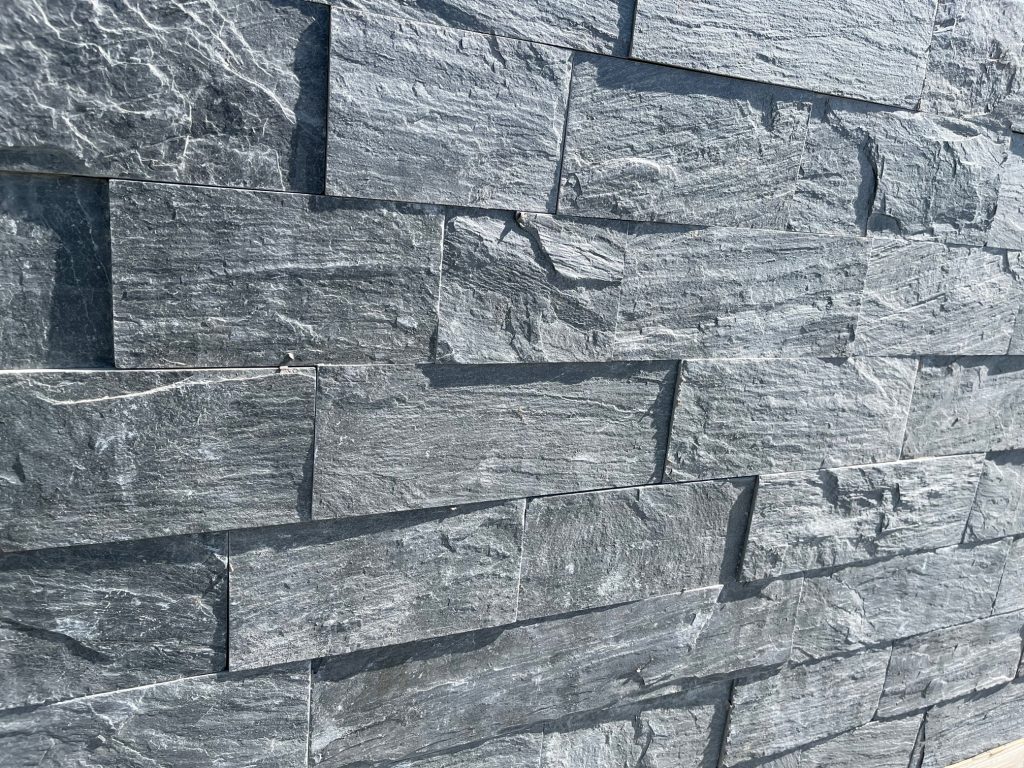
A slate wall finished in Riverstone offers more than surface protection. Its naturally riven texture creates depth and variation that synthetic materials cannot replicate.
Unlike uniform alternatives, slate wall cladding in phyllite responds to changing light throughout the day. This delivers natural beauty while maintaining high quality standards in performance.
Fire safety and exterior wall cladding compliance
Post-Grenfell regulations have reshaped how materials are specified for exterior applications. Riverstone provides clarity for specifiers:
- A1 non-combustibility under EN 13501-1
- No resins or coatings that could ignite
- No requirement for additional fire testing ,/li>
This simplifies compliance for buildings over 18 metres, where exterior wall cladding must meet strict safety criteria.
Exterior applications: Built for harsh conditions
Riverstone is engineered by nature to withstand extreme environments. Its natural properties make it highly weather resistant, offering:
- Protection against driving rain and wind
- Resistance to acid and atmospheric pollutants
- Stability in freeze-thaw conditions
For projects exposed to harsh weather conditions, it delivers dependable, long-term performance.
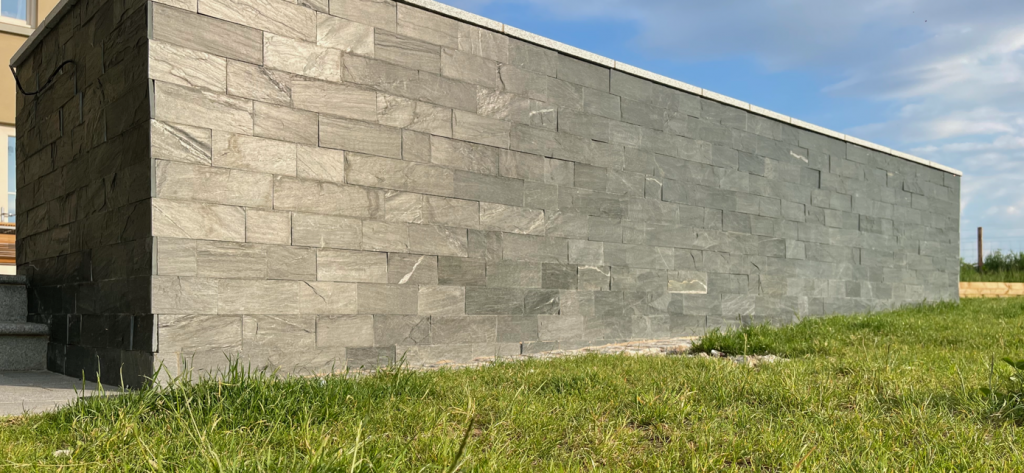
Interior flooring and wet area performance
Riverstone is equally effective indoors. Its coarse grain and slip-resistant surface make it suitable for:
- Bathrooms and wet rooms
- Kitchens and living spaces
- High-traffic commercial flooring
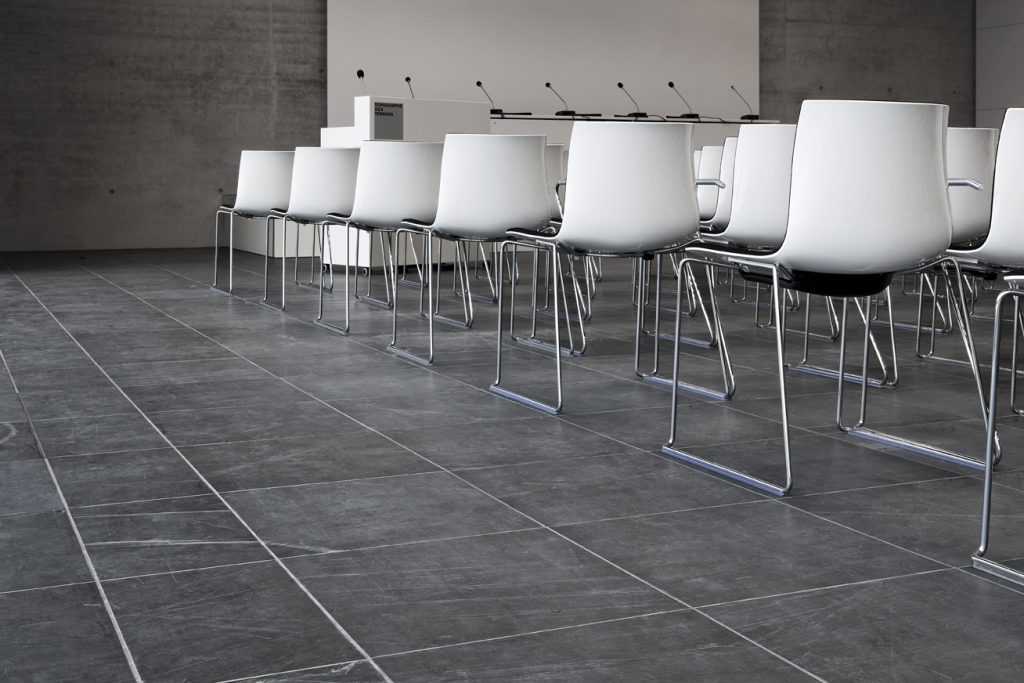
Roof-to-wall continuity in facade systems
Few materials allow true continuity across a building envelope. Riverstone enables architects to specify a single natural slate material from roof to wall and into interior spaces.
This approach creates a cohesive architectural language, where natural slate cladding, roofing and flooring work together as one unified surface.
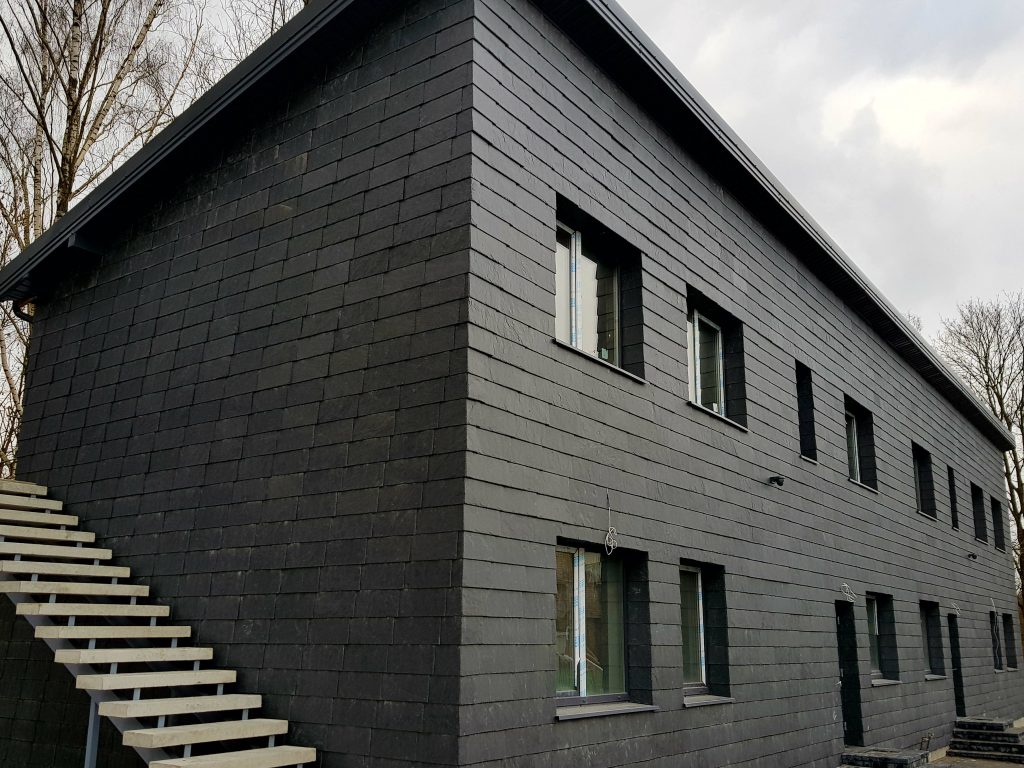
Ready to specify Riverstone?
SSQ supports architects at every stage, from concept through to installation. Whether you are developing facade systems, planning renovation works or specifying a slate cladding system for a new build, contact SSQ and explore how Riverstone can transform your next project with a single, high-performance natural material.