Phyllite: 560 million years in the making
Phyllite is a type of metamorphic rock, that forms when shale is subjected to incredible heat and pressure for hundreds of millions of years underground. The resulting material is an outstanding natural stone that’s perfectly suited to roofing, flooring, cladding and much more.
Harder, denser and stronger than slate, or any of its other competitor materials, phyllite nevertheless splits easily during processing, and the mica particles on its surface give it an unmistakable ‘phyllitic sheen’.
Find Out More
Phyllite thrives under pressure
Phyllite is the result of similar geological processes to the ones that produce other natural materials like slate – except phyllite undergoes even higher temperatures and greater pressures. That causes the clay present in the material to break down and form mica, which is responsible for phyllite’s satin-like lustre.
The finest phyllite, sourced from South America
Phyllite is extremely rare – much more so than slate. But at SSQ, we’re lucky enough to own one of the finest phyllite quarries in the world – San Luis, in La Repressa, Argentina.
It’s here that we source our exclusive Riverstone phyllite, put the extracted material through the most rigorous quality checks, before distributing the very best of it to customers all around the world.
Contact usSlate vs Phyllite: What’s the Difference — and Which SSQ Range Is Right for Your Project?
If you’re weighing up slate vs phyllite for a roof, it helps to start with the fundamentals: phyllite sits between slate and schist on the metamorphic “spectrum,” which is why its texture and surface character can look subtly different in finished installations. For a simple overview, see [What is Phyllite?], then explore how it performs in the real world with SSQ’s two phyllite ranges — Riverstone andMontegris— to compare tone, riven character and suitability for your project brief. If you’re still undecided between alternatives, the SSQ slate comparison page is the quickest way to shortlist the right material and finish before requesting samples or a specification.
Contact us
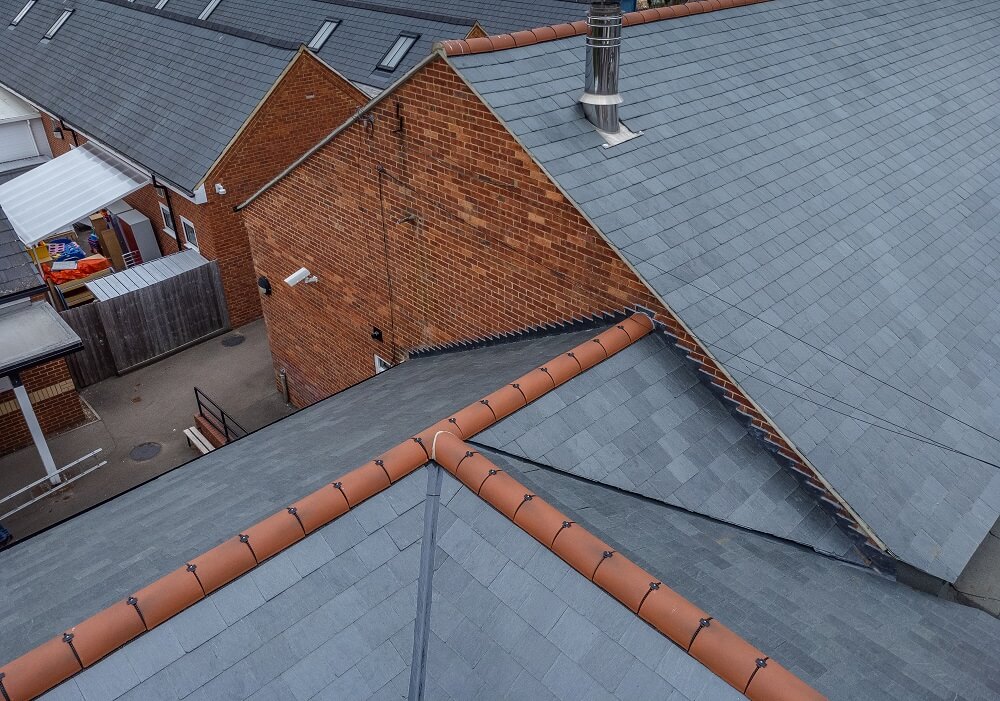
Phyllite for Heritage Roofs: A Credible Alternative When Indigenous Slate Is Hard to Source
When working on heritage or conservation projects, sourcing a like-for-like indigenous slate can be challenging — whether due to availability, lead times, or the need to match existing roof character. Phyllite can be a practical option in these situations, offering a natural stone appearance that sits between slate and schist on the metamorphic spectrum. If you’re new to the material, start with What is Phyllite? for a clear overview, then read Heritage buildings: consider phyllite to see why it’s increasingly specified for heritage roofs when traditional sourcing constraints apply.
Contact usFAQs About Phyllite
What type of rock is phyllite?
Phyllite is a metamorphic rock. It forms when shale or slate is changed by heat and pressure over a long period of time.
Is phyllite foliated?
Yes. Phyllite is a foliated metamorphic rock, which means it has a layered structure that allows it to split into thin sheets during processing.
What is phyllite made from?
Phyllite usually forms from shale or slate. As the original material is subjected to greater heat and pressure, minerals such as mica develop and give phyllite its distinctive sheen.
Is phyllite the same as slate?
No. Phyllite is related to slate, but it has undergone a higher degree of metamorphism. This makes it harder and denser, with a more noticeable satin-like surface sheen.
What is phyllite used for?
Phyllite is used for roofing, flooring, cladding and architectural stone applications. Its durability, natural split and distinctive surface character make it suitable for both traditional and contemporary projects.
Contact us
Testimonials
With the roofs being such a visible feature, the choice of roofing slate was a significant decision. We involved the roofing contractor at an early stage in the selection process and they recommended SSQ’s Del Carmen Blue-black slates. Although it’s not an indigenous slate, it is an excellent match for the originals and, having used Spanish slate on other projects, we know the quality is there.
Richard Thorpe, Ridge and Partners LLP
Testimonials
The choice of SSQ Del Carmen was made easier after confirmation that it had gained approval for use in the Welsh National Parks as an alternative to indigenous materials. We were also pleased with the level of technical, design and on-site support we received from SSQ.
The Hafod Renewal Office
Testimonials
SSQ Matacouta slate was chosen as the most sympathetic option. Its consistency and competitive price make it a clear winner over indigenous slates.
Historic Scotland
Testimonials
The quality and strength were there, the colour was similar to indigenous Welsh slate and its ‘traditional’ look was in keeping with the surrounding community. In fact, as I had used it on my own Edwardian house, I knew it was a good slate!
Julian Bohling, OSP Architecture
Testimonials
Working in a conservation area brings a special responsibility. SSQ Riverstone slate fits perfectly, its tone and texture blending seamlessly with its surroundings.
Joan Kinane, Architect
Testimonials
With so many ‘interested parties’ the local planners set their minds on a natural slate roof at a very early stage of the project and, from this starting point, we needed something that would satisfy a number of technical and aesthetic requirements – SSQ Domiz blue-grey, was the one chosen for use to compliment the local ‘Shere Green’ colour.
Ben Hunt, Total Project Integration
Testimonials
We specified SSQ First Domiz Blue-grey roofing slate for both technical and aesthetic reasons:its strength and quality gives the performance needed and its cold, hard, colour provides a dramatic foil to the rich warmth of the western red cedar walls.
Mark Webber, Architect, Nichols Brown Webber
Testimonials
SSQ Rocaber Blue-grey slate was actually chosen at the initial design-concept stage. A natural slate roof was in keeping with the traditional local architecture.
Tom Ewan, Architect at Model Developments
Testimonials
It was an absolute pleasure to meet you today, and I just wanted to take a moment to thank you for your time and a wonderfully informative CPD.
The whole team really enjoyed it, and you definitely conveyed your passion and knowledge of your products!
I would say I will keep SSQ in mind for future projects, but they always have been. However, I have definitely left with a need to utilise more slate in my design work!
Michael Clifton BSc ACIAT - Oakbridge Bespoke Homes Ltd
Testimonials
It is a very attractive development and we needed something equally attractive and of equally high quality for the roofing material. SSQ Del Carmen slate is top quality, and we liked the colour and texture. What’s more, it is very good value. I’d have no hesitation choosing it again.
Mr Keith Wills, Clancy's Building Manager
Testimonials
Being both high quality and cost-effective, Matacouta slate from SSQ is proving very popular with specifiers and contractors alike for refurbishment as well as for new build projects.
Mr Roy Clark, Baxter Clark and Paul
Testimonials
We put forward Riverstone as a cost-effective, yet high quality alternative to Welsh Slate, and it was accepted on that basis. The refurbishment work has now been completed and both the owners and ourselves are very happy with the result.
Keith Hicks Architect at Pave Hall